
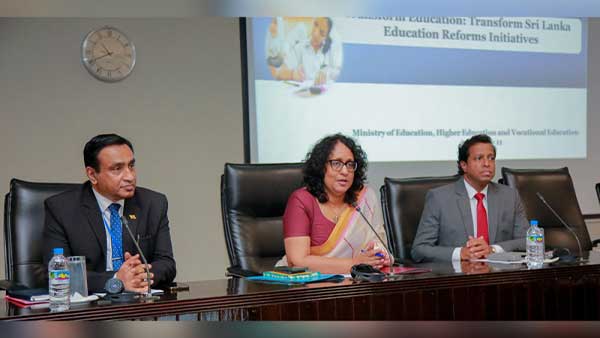
Education Reform Must Be Democratic, Transparent, and People-Led — Centering Women and Feminist Voices
Education in Sri Lanka is not a commodity to be governed by market efficiency; it is a hard-won public good, a democratic right, and a cornerstone of social reproduction. The country’s free education system emerged from anti-colonial struggle and popular mobilization, reflecting a collective commitment to social mobility, regional equity, and citizenship. From a feminist political economy perspective, education sustains not only skills and productivity but also care work, democratic participation, and social solidarity. Women—particularly teachers, education workers, caregivers, and students—constitute the backbone of this system, especially in rural, estate, and the former conflict affected North and Eastern areas.
Yet, when education reforms in Sri Lanka are designed through elite, technocratic, or market-oriented processes, women’s labor, knowledge, and lived realities are systematically marginalized. Such exclusion produces policies that deepen gendered, class-based, and regional inequalities, while disconnecting education from the social needs it was historically meant to serve. These dynamics are especially dangerous in a country marked by uneven development, ethnic marginalization, and the lingering effects of war and economic crisis.
For this reason, the establishment of a People’s Commission for Education Reforms is urgently necessary. Democratic governance in Sri Lanka cannot be reduced to procedural consultation after decisions are made; it must be a substantive process rooted in popular sovereignty. A genuinely people-led commission must include women educators, feminist scholars, trade unionists, students, and community organizers—particularly from marginalized communities such as estate workers, rural women, Muslim and Tamil women, and those from the North and East. Without feminist participation, reform processes risk reproducing entrenched patriarchal and ethnocentric power structures that have historically shaped policy-making in Sri Lanka.
The National People’s Power (NPP) government’s haste in advancing education reforms under pressure from external actors such as the Asian Development Bank (ADB) is deeply concerning from a feminist political economy standpoint. Sri Lanka’s history of structural adjustment and donor-driven reform has repeatedly demonstrated how conditionalities undermine democratic decision-making and reshape public services according to market logics. In education, this often translates into creeping privatization, standardized performance metrics, and cost-efficiency frameworks that erode teachers’ autonomy and shift care and education burdens onto households—burdens that are overwhelmingly borne by women. This trajectory stands in direct contradiction to Sri Lanka’s constitutional commitment to free public education and risks intensifying existing inequalities across class, gender, and region.
The leadership of a People’s Commission must therefore rest with individuals who possess intellectual independence, feminist political commitments, and broad public credibility. The proposal to appoint Professor Arjuna Parakrama as Chairperson and Niyanthani Kadirgamar as Secretary reflects the necessity of protecting the reform process from political interference, privatization agendas, and technocratic capture. Equally essential is the meaningful inclusion of feminist women within the education sector at all levels of decision-making—not as token representatives, but as agenda-setters, theorists, and producers of policy-relevant knowledge grounded in Sri Lanka’s social realities.
Proceeding with education reforms in Sri Lanka without democratic consultation—particularly without the leadership of women and feminist actors—will deepen social inequality, weaken the free public education system, and normalize exclusionary policy-making practices. From a feminist economic perspective, these are not neutral or technical policy decisions; they are structural acts of dispossession that disproportionately harm women and marginalized communities. All ongoing education reforms must therefore be halted immediately. This pause is essential to prevent irreversible damage and to create the conditions for a participatory, transparhent, feminist, and people-led reform process—one firmly grounded in equity, care, democratic accountability, and the public interest in Sri Lanka.
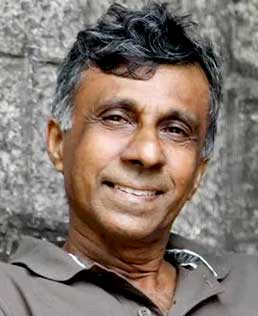
Sumanasiri Liyanage